O QUE PROCURA?
Notícias
Traduzir / Translate
ECCO: Closure in Slovakia, A Warning for Portugal — We Stand in Solidarity with Our Slovak Colleagues
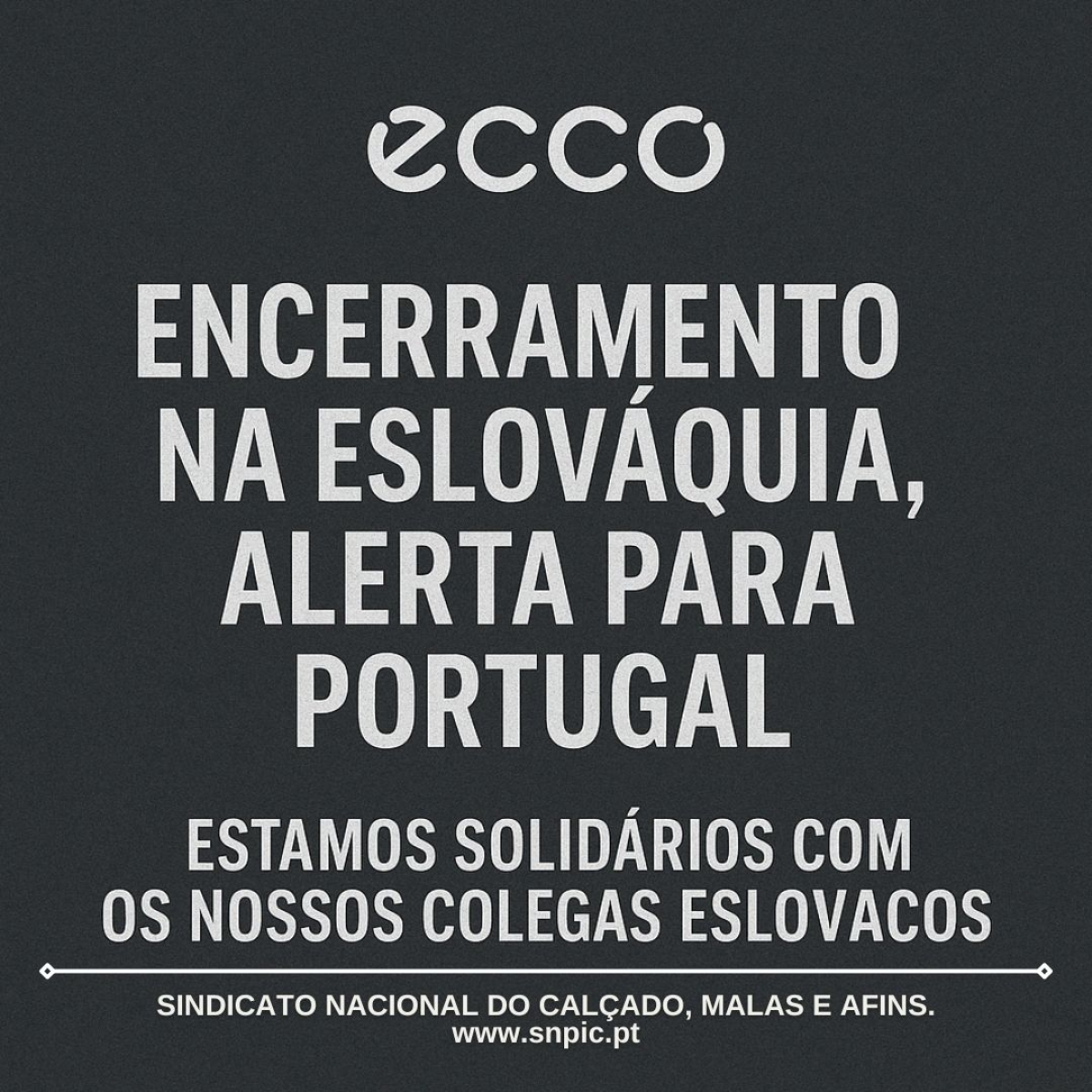
Martin: Where Everything Collapsed Without Warning
Martin is an industrial city in central Slovakia, with a long working-class tradition and one of ECCO’s key strategic sites in Europe. Since the late 1990s, the factory there had become a reference in high-quality footwear production, employing over 640 highly skilled workers and responsible for producing more than 50 million pairs over nearly three decades.
For hundreds of families, this factory was more than a workplace: it was the foundation of a life built on effort, stability, and dignity. The sudden shutdown shook not only the local economy, but also the emotional and familial structure of an entire city. Parents returned home without explanation, directionless, overwhelmed by the feeling of the ground vanishing beneath their feet. It was more than a factory. It was an economic and social pillar, a space of accumulated knowledge, worker dedication, and a longstanding bond between company and community. It was also an internal benchmark of quality within ECCO’s global network.
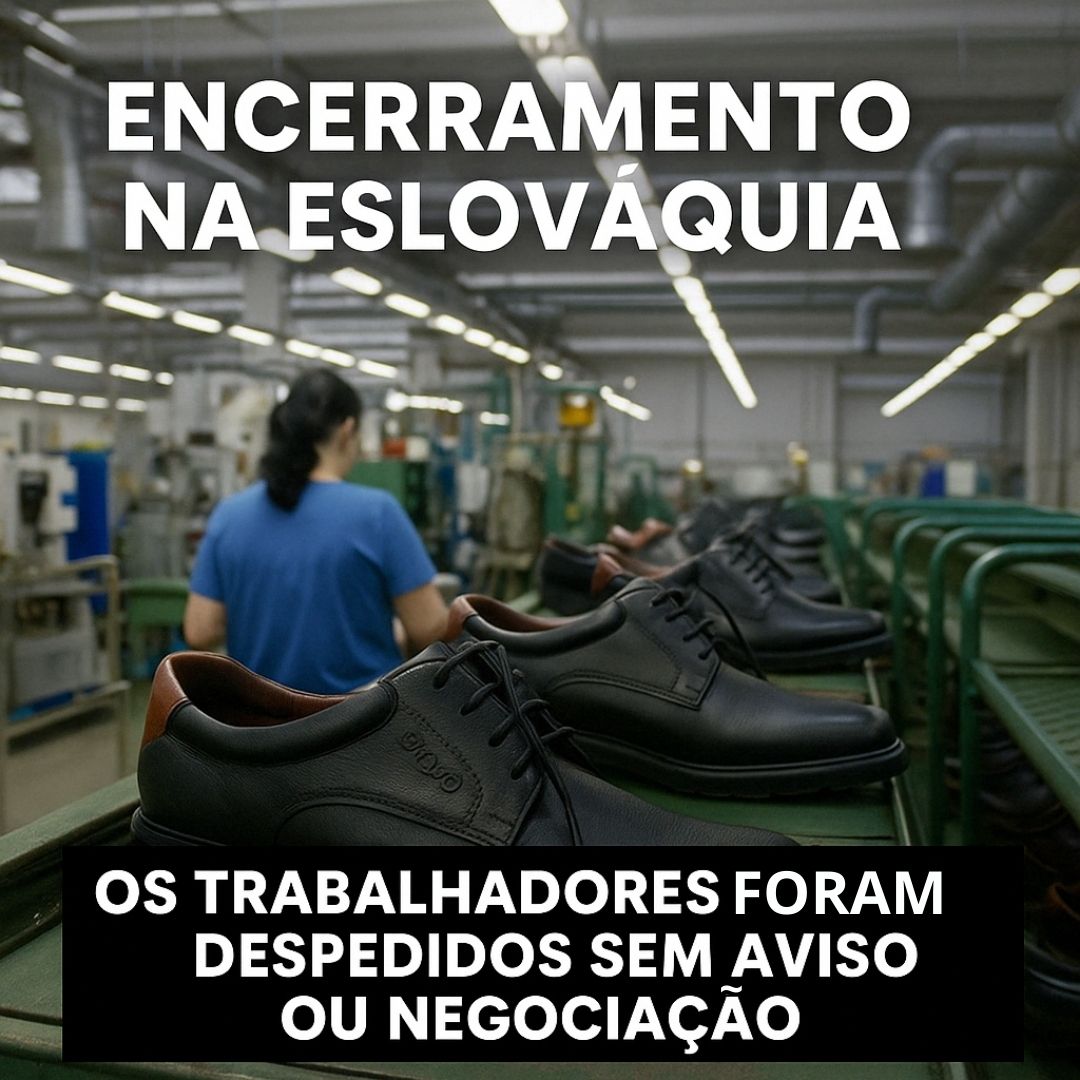
In April 20255, all of that was abruptly dismantled. The company unilaterally announced the factory’s closure. The decision caught everyone off guard — with no negotiations with the IOZ union, no phased plan, and no respect for the human and professional bonds built over more than 25 years of shared history.
Martin lost more than a factory. It lost its dignity.
Families lost their livelihood. Retirements were jeopardized. Hundreds of lives were pushed into uncertainty — without any technical or economic justification that could explain such a drastic move.
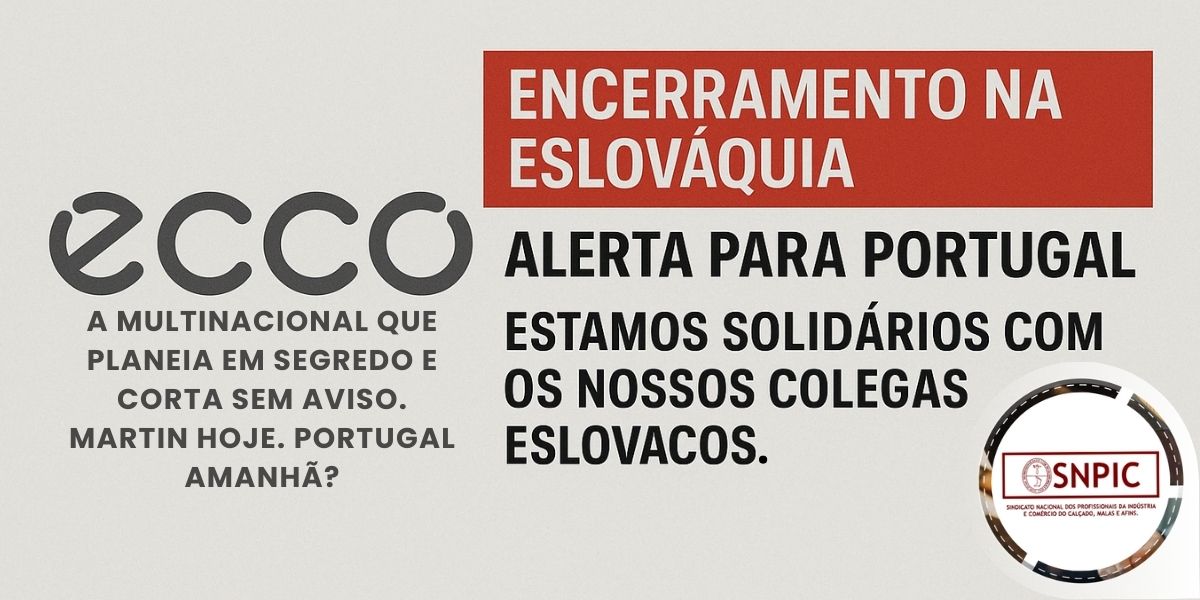
ECCO: The Ethics That Were Left Behind
Founded in 1963 in the Danish town of Bredebro, ECCO was born with a clear philosophy: vertical integration of production, investment in training, worker appreciation, and quality as a core value. Under the leadership of its founder, Karl Toosbuy, the company became a European reference in innovation, ergonomics, and respect for the human factor — an ethical hallmark the company itself proudly promoted.
ECCO was not built on financial capital alone, but on the reputation of a family-run project that claimed to put people first. The company's vertical model was seen as pioneering — not just for ensuring control over every stage of production, but for symbolising a genuine commitment to job stability and the dignity of labour.
For decades, the brand stood out with campaigns promoting a balance between comfort, durability, and social responsibility. At trade fairs, conventions, and corporate announcements, ECCO presented itself as “different.” It was the symbol of a company where technology did not replace the worker — it uplifted them.
The company expanded into dozens of countries and built a business model that, for a long time, stood apart from the industry standard: it combined innovation with human respect. In several regions — including Slovakia — closeness with workers was part of its institutional identity. Factories like the one in Martin symbolised that culture of trust and stability.
However, over the past decade, that image has been dismantled. Proximity with workers has been replaced by a cold and distant corporate culture, marked by silent restructuring, abrupt cost-cutting, and a stark lack of dialogue. Decision-making is now driven by numbers and targets — by convenience and corporate silence.
Today's ECCO no longer listens. No longer explains.
No longer respects. It only executes.
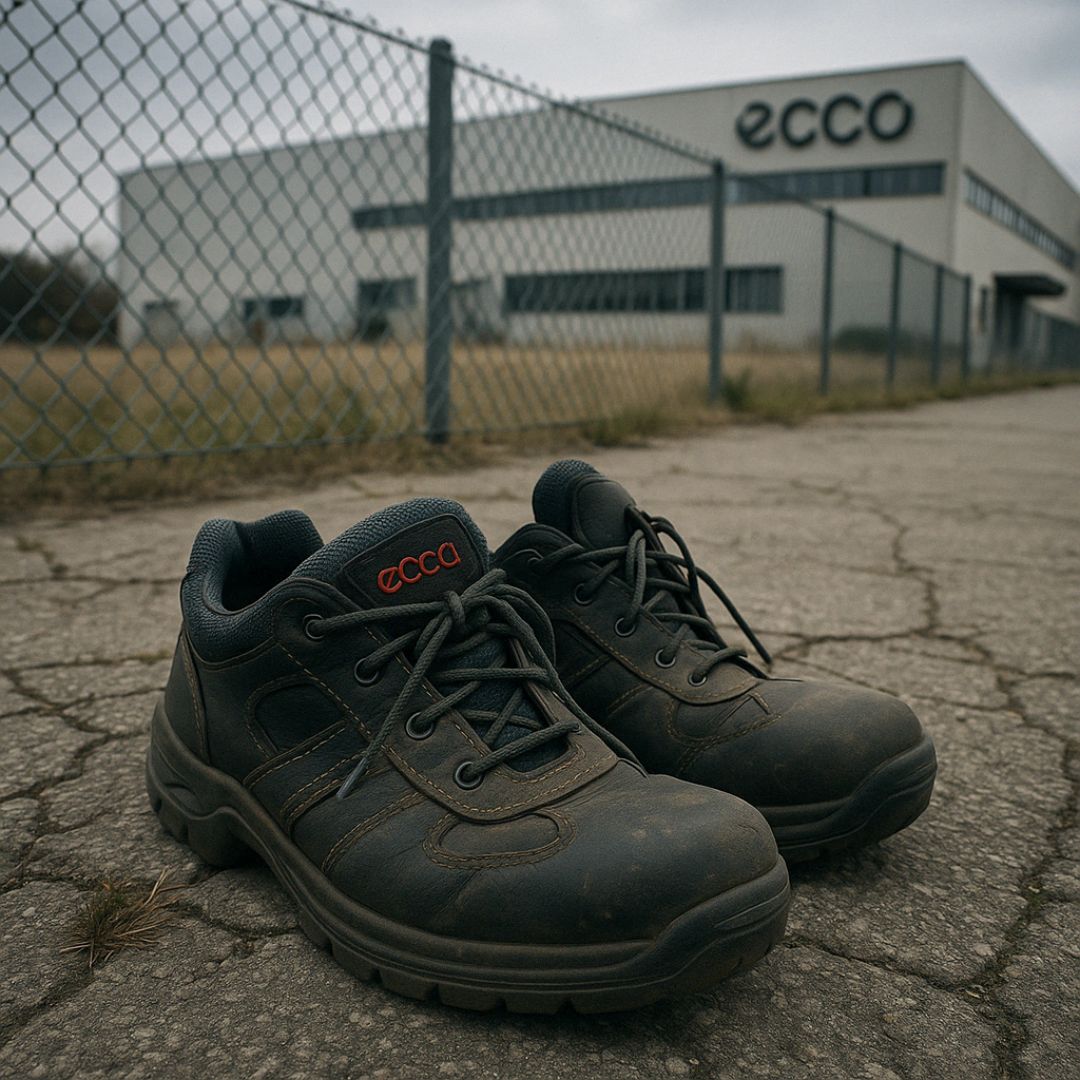
Decisions That Silence: From Russia to Europe's Silence
In the midst of a war in Europe, ECCO made an unexpected and controversial decision. In February 2022, after Russia’s invasion of Ukraine, dozens of Western multinationals immediately suspended their operations in Russian territory, citing ethical, political, and reputational reasons. ECCO, however, chose a different path: it decided to stay. The justification, provided by then-CEO Panos Mytaros, was clear — and carefully worded: “We are responsible for 1,800 employees across 250 stores.”
The decision sparked protests inside and outside Denmark. Major retail chains cut ties with the brand. Even the Danish Royal Family severed its institutional relationship with ECCO, withdrawing a prestige built over decades. Still, ECCO remained silent. It continued operating in Russia — without revisiting its position, without answering public criticism, and above all, without honouring the European values it claimed to represent.
At the same time, behind closed doors, the company was quietly preparing to shut down its unit in Martin — a model factory within the European Union, with decades of productivity, stability, and commitment. In Martin, ECCO did not invoke “social responsibility.” It showed no concern for its more than 640 workers. There was no consultation, no transition plan, no explanation.
To this day, ECCO has never justified its decision.
It has never offered any technical, economic, or strategic rationale.
And most importantly, it has never shown any regret.
The same company that refused to leave Russia “out of care for its workers”
fired 643 European citizens — without notice, without negotiation, without remorse.
— ECCO’s silence says it all. And what it says cannot be accepted.
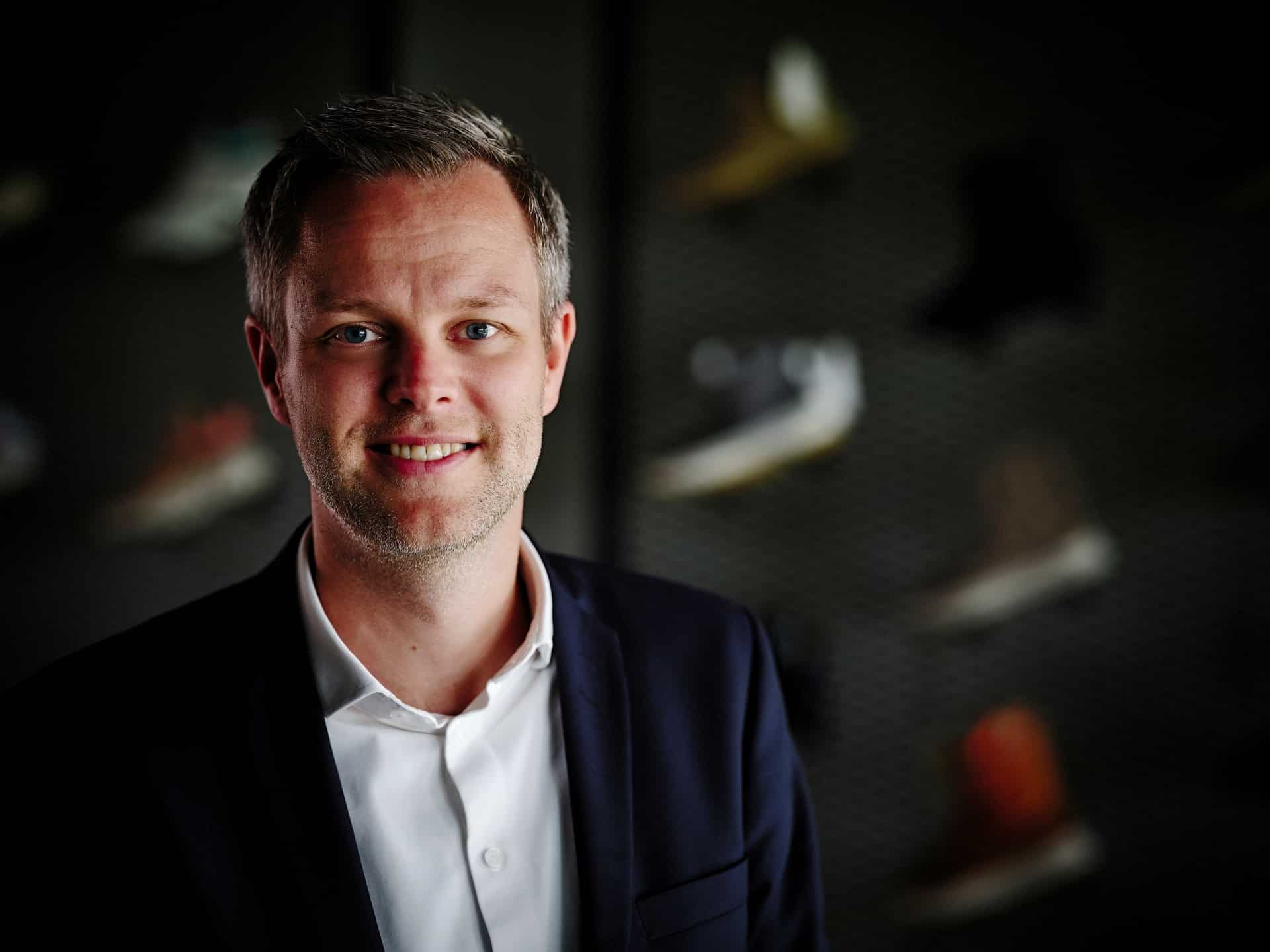 Thomas Gøgsig took over last year (2024) — suddenly — as the new CEO of the ECCO Group. (Image – PR Photo)
Soulless Management: Panos, Gøgsig and the Empty Transition
A company’s leadership defines its values — not in words, but in practice. And in ECCO’s case, recent management has shown a complete break from the brand’s founding principles.
In 2021, Greek executive Panos Mytaros took over as ECCO’s CEO. It was under his leadership that the company chose to remain in Russia after the invasion of Ukraine, despite facing international boycotts and losing the support of the Danish Royal Family.
Mytaros spoke of “responsibility toward Russian workers.”
But not once did he mention protecting European ones.
In December 2023, Panos quietly stepped down. He was replaced by Thomas Gøgsig, who had been part of ECCO’s executive board since 2021 and previously held the role of Chief Commercial Officer.
Today, ECCO is led by Thomas Gøgsig, who assumed the role of CEO following Mytaros’ departure. Gøgsig did not mark a change of direction. Instead, he continued the silence — and confirmed, deliberately and without justification, the closure of the Martin unit.
Panos spoke of responsibility. Gøgsig delivered abandonment.
The transition amounted to the continuation of a management model that turned its back on its workers — in the name of convenience, silence, and a lack of European accountability.
Numbers Don’t Lie: It Was a Strategic Decision
In 2023, ECCO recorded a net profit of €90 million. Turnover remained stable, even with currency fluctuations. In March 2025, the company announced a one-off loss of 280 million Danish kroner (approximately €37 million), attributed to an internal cost-cutting plan aimed at “strengthening core activities.”
Despite the loss, shareholders retained strong equity levels, and the company projected a turnover growth of between €1.65 and €1.75 billion for 2025.
According to ECCO’s own reports, the Martin unit never experienced any significant drop in productivity.
The data is available. It is public. And it is clear:
ECCO did not shut down the Martin factory out of economic necessity.
It did so because it wanted to. Because it was convenient.
Because no one stood in the way.
In a year where growth was forecast, the company still laid off hundreds.
That’s the real strategic plan.
ECCO didn’t fail out of need. It chose to walk away.
Pavol Hustava and IOZ: The Dignity of Unionism
In one of his most powerful testimonies, Pavol Hustava declared:
“This situation has nothing to do with who governs the country right now.
The real issue is that it’s far too easy for foreign investors to exploit what they can —
and then pack their bags and move production elsewhere.”
For Pavol, what happened in Martin wasn’t the result of sanctions against Russia,
but rather the reflection of a deliberate business strategy.
He reminded the public that, when the war in Ukraine began, ECCO refused to leave the Russian market, citing concern for its employees in the country.
Yet now — in stark contrast — it is shutting down a factory in the European Union with more than 600 workers, showing no regret whatsoever.
Pavol’s message is clear:
ECCO’s concern was never really about people.
It was — and still is — about the business.
SNPIC proudly recognises and reaffirms its full support for the IOZ and the legitimate, courageous and deeply human struggle led by Pavol Hustava and the workers of ECCO Slovakia.
Portugal: Between the Mirror and the Warning
ECCO’s actions in Portugal have shown, over the years, recurring patterns of mismanagement and unilateral labour restructuring — often marked by a lack of dialogue and anti-union practices. The SNPIC has publicly denounced this behaviour, which seeks to weaken workers’ collective organisation and promote fear and division. While individual agreements are sometimes offered, the overall structure remains unacceptable.
This is not new.
ECCO’s conduct in Portugal has followed the same model seen elsewhere.
At São João de Vêr, in Santa Maria da Feira, stands ECCO’s main production unit in Portugal. Since 1984, this factory has been regarded as an example of quality and stability within the group.
But in recent years, troubling signs have emerged.
Mass layoffs in 2024, strikes for better wages and working conditions, and internal reports and complaints of a lack of dialogue have triggered widespread concern.
The parallels with what happened in Martin are too strong to ignore.
The management model is the same. The silence is the same. So is the absence of guarantees.
The closure of the Slovak unit was abrupt and happened despite strong performance and profitability.
The SNPIC issues a warning:
If it happened there, it can happen here.
This is not about expecting the worst.
It’s about making sure the worst doesn’t happen.
The only real defence for Portuguese workers is organisation, vigilance, and union solidarity.
And the SNPIC will always be where rights are at risk —
and where it’s necessary to act before the next blow falls.
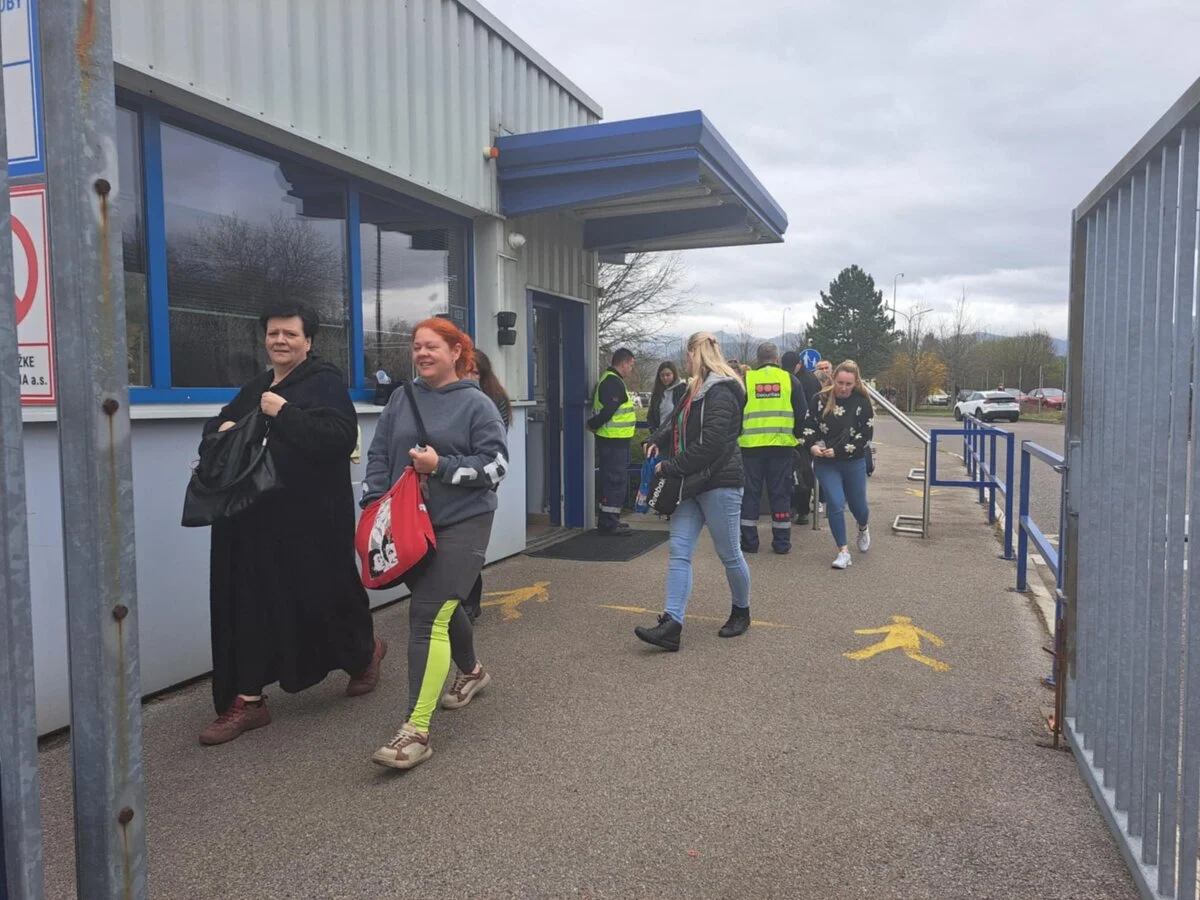 Nearly 650 people work at the factory. (Source: Miroslava Kovačková)
SNPIC Demands, Denounces and Acts
The National Union of Footwear, Bags and Related Industry Workers (SNPIC), as the legitimate national representative of workers in the sector, is not writing this article to recount the past. It writes to act on the present — and protect the future.
ECCO must respond.
Not with vague statements — but with real commitments.
- In Portugal, the SNPIC demands that ECCO:
- Publicly confirm that there is no plan to close or relocate the João de Vêr unit;
- Present with full transparency any restructuring or downsizing plans;
- Establish permanent consultation channels with union representatives;
- Fully respect the collective bargaining agreement in force.
- At the European level, the SNPIC demands that ECCO:
- Recognise and negotiate with IOZ and Pavol Hustava all forms of fair compensation for the workers of Martin;
- Immediately re-evaluate its presence in Russia, in line with the principles the company once claimed to uphold;
- Issue a public apology for the abrupt and unnegotiated closure of the Slovakian unit.
This message is a direct appeal to all workers — unionised or not.
Because when a company closes, everyone is affected.
Because even in forced dismissals, there is always room to fight.
To fight for more.
To fight with dignity.
To fight together.
The closure of the ECCO unit in Slovakia happened when no one expected it.
History shows that it can happen again —
when management is weak, dialogue is absent, and workers are not united.
In Portugal, there is still time. But only if we stand together.
Pavol's Struggle Is Just. IOZ Is Legitimate. Portugal Will Stand on the Right Side of History.
This is not a slogan.
It’s a position. A commitment. A choice.
What happened in Martin is a warning.
What the ECCO group did is unacceptable.
And what the workers of Slovakia are doing is an example for all of Europe.
SNPIC affirms, with conviction and clarity:
We are on the side of Martin. We are with IOZ. We stand with Pavol Hustava.
We know that ethics are not written in corporate reports —
They are practised in decisions.
And we know this too:
Workers who are informed, organised and united will never be caught off guard.
📌 Pavol’s struggle is just. IOZ is legitimate.
And Portugal will stand on the right side of history — the side of organisation, dignity, and truth.
Sources:
- ECCO regista perdas de centenas de milhões após plano de cortes (Avisen Danmark)
- Dois anos de silêncio vergonhoso da ECCO sobre a presença na Rússia (Avisen Danmark)
- ECCO volta aos lucros com resultados de centenas de milhões (Avisen Danmark)
- Despedem mães solteiras e pré-reformados. O futuro dos trabalhadores é incerto, diz sindicalista (MY Turiec – Eslováquia)
Partilha com os teus conhecidos!


Sindicato Nacional dos Profissionais da Indústria e Comércio do Calçado, Malas e Afins
SEDE
Av. Benjamim Araújo, 113
3701-912 S. João da Madeira
HORÁRIO
2ª a 6ª feira 9:30-12:30 / 14:00-18:30
CONTACTOS
snpic@snpic.pt
968 929 744
(Chamada para rede móvel nacional)